HomeThe IssuesAction CentreMedia CentreAbout UsDonateSupport Animals Australia

Battery Hens

Back in 2000, 10 million Australian laying hens had their last chance at freedom when state and federal politicians voted on proposals to ban the battery cage. Their decision comes into effect on the 1st January 2008. This time their lack of compassion was measurable.

Betty is one of approximately 10.5 million hens imprisoned in battery cages in Australia. She will never feel the sun on her feathers, beat her wings, or experience the life that nature intended her to. Industry operators ignore the beating hearts within each of the tens of thousands of hens they imprison, turning a ‘blind eye’ to suffering they inflict in the name of profit.


Betty and her kind are denied all of their basic behavioural needs that provide quality of life. Crammed in wire cages with up to five other hens—they cannot escape from each other, or even have room to stretch their wings. There are no ‘creature comforts’ in a battery cage—no nest to lay eggs in, no perch to stand on, only barren wire to stand on and rub painfully against. This is their life, day after day, night after night.

The case to ban battery cages is irrefutable on the basis of the terrible suffering they inflict.

Dead birds and waste

Stressed hens often die in the unnatural confinement of the battery cage. Dead hens and discarded eggs pile high at this Australian battery hen farm

Other countries have acted. Sweden, Finland, Switzerland, Germany, Austria and Norway have already banned battery cages. The European Union countries are phasing them out and there will be a total ban by 2012. Even food giants such as McDonald’s UK and Burger King US (better known as Hungry Jack’s in Australia) have made the switch to cage-free.

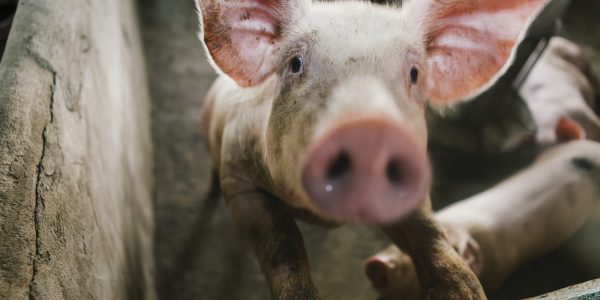
In Australian, just like the pig industry, a ‘code of cruelty’ has protected battery hen operators from the kind of cruelty prosecutions that domestic animals enjoy.

As a new century dawned in 2000, Australian animal welfare groups held high hopes that with it would come the realisation that no ethical and civilised society could continue to support such cruelty on the basis of profit.

The test came when politicians met in August 2000 to vote on whether to ban battery cages. Despite overwhelming evidence to support a ban on battery cages, they instead voted to increase the space given to individual hens by the size of four matchboxes (100 square cm), and heralded this to the public as a great leap forward in animal welfare.

Trampled battery hen

Under intense cage confinement, sick hens are trampled by their cagemates. This injured bird became wedged under her cage.

The ‘compassion’ of our politicians instantly became measurable and condemnable.

If further proof is required as to why we must make uncaring politicians irrelevant, then reflect on this: the date on which this tiny space increment must be implemented is based on the type of cage and when it was installed. Politicians wanted to ensure that industry operators got full value for the cruel metal cages they invested in. As a result, some industry operators will not have to increase the area provided to each hen until 2023.

In effect, it will make little difference to Betty’s life of misery whether she is provided with 450 square cm or 550 square cms of space. The larger space allowance still only equates to a total of two DVD covers per hen, making a mockery of suggestions that this cruel industry has embraced improvements. All of the elements that cause such suffering will continue.

To compound their misery, lack of exercise causes hens' bones to become weak, brittle and break easily (we know it as osteoporosis). Studies have shown that 1 in 6 hens in cages have broken bones[1] and that one in 3 hens have at least one broken bone by the time they are slaughtered[2].

Tens of thousands of birds are crammed into each shed.

Cages containing up to six birds each are typically stacked in tiers to maximise the number of birds who can be crammed into one shed. Feces continually accumulates under these cages, making the air thick with ammonia. Newer sheds may stack cages five or six high—making inspection of all birds difficult—and use conveyer belts to remove the eggs and the feces (from under the cages).


When Betty finally outlives her commercial usefulness in 12 to 18 months, she will be roughly dragged out of her cage, stuffed into a crate and transported to a slaughterhouse.

Her last moments will be spent terrified, hanging by her legs on a slaughter chain. And still no-one will have noticed Betty’s beating heart, or cared that she knew nothing but pain and misery during her life.

Factory farming is cruel, immoral and a blight on our humanity. This terrible wrong will not be righted by politicians who care only about alliances with industries—it will be righted by outraged citizens using their purchasing power to destroy the financial foundations on which such cruel industries exist.

The compassion of governments and industry is finally measurable. It is the size of 4 match boxes. Thankfully we don’t need them to free Betty.

The Australian Egg Corporation reported that in 2006 the market share of free-range eggs had increased to 20.3%. The key to increasing this further is an aware community.

In the UK where there has been far greater community awareness of the cruelty of the battery hen system, the market share of free-range eggs is already 33%, with experts tipping it to increase to 50% within five years.

Rescued battery hens in the sunshine

These rescued ex-battery hens experience laying in the sunshine for the first time in their lives.


Self-interest drives politicians and industry operators to invest in cruelty, but the power to free Betty rests with us, by simply using our purchasing power to invest in kindness.

The choice is yours. Take action, and Free Betty!


1 Parkinson G (1993), "Osteoporosis and bone fractures in the laying hen", Progress report of work at the Victorian Institute of Animal Science, Attwood

2 Gregory N & Wilkins L (1989), "Broken bones in domestic fowl: handling and processing damage in end-of-lay battery hens", British Poultry Science , vol 30 (555-562)

JOIN Animals Australia TAKE ACTION! Donate Now!
Upcoming Events
What's the best lifestyle choice to combat climate change? (See Results)
Printer friendlyPrint this page
Recommend this pageEmail this page to a friend
RSSRSS  (what is this?)

Donate | Privacy Policy | Sitemap | RSS | Contact Us