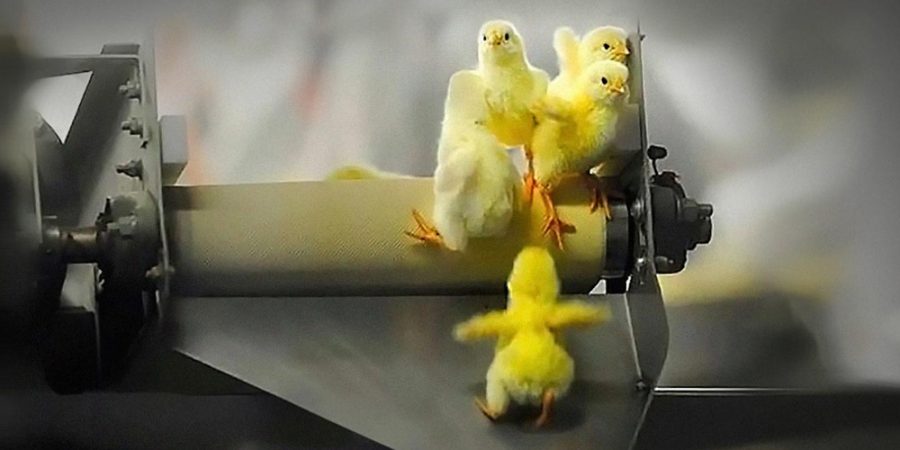
Chicken chicks on conveyor belt in a factory farm

The reality of egg production: chick shredding.

The first day of life for a male chick born into the egg industry is also his last.

Animals Australia

Animals Australia team

Last updated February 11, 2026

Since he can’t lay eggs, a male chick is considered ‘worthless’ to the egg industry. So, every day in hatcheries, males are sorted from females and dropped into metal grinding machines or gassed to death.

The killing of day-old chicks happens in all commercial egg production systems, including free-range, cage-free, barn-raised, and organic.

Laws don’t protect them

An estimated 12 million chicks are killed on their first day of life in Australia every year … simply because they have no economic value to the industry they’ve been born into.

These routine mass killings are entirely legal.

Many people are shocked to learn that animals categorised as “food” or “entertainment” are excluded from the very cruelty laws that protect our companion dogs and cats — those fortunate enough to be classified as “friends”. These exemptions are outlined in industry model codes of practice.

This image contains content which some may find confronting

Tiny yellow chicks, bred into the egg industry, going over the side of a conveyor belt into a macerator.
Their first day on earth is overwhelming, frightening – and it will be their last. Because they are male and cannot lay eggs, they are deemed a 'waste product' of the commercial egg industry.

The killing of these animals who are sick, injured, or simply born male, is enshrined in our laws as an acceptable cost of doing business — and even referred to as “humane”.

The Model Code of Practice for the Welfare of Animals: Domestic Poultry states that “culled or surplus hatchlings … must be destroyed humanely by a recommended method such as carbon dioxide gassing or quick maceration…

The sad reality for chicks

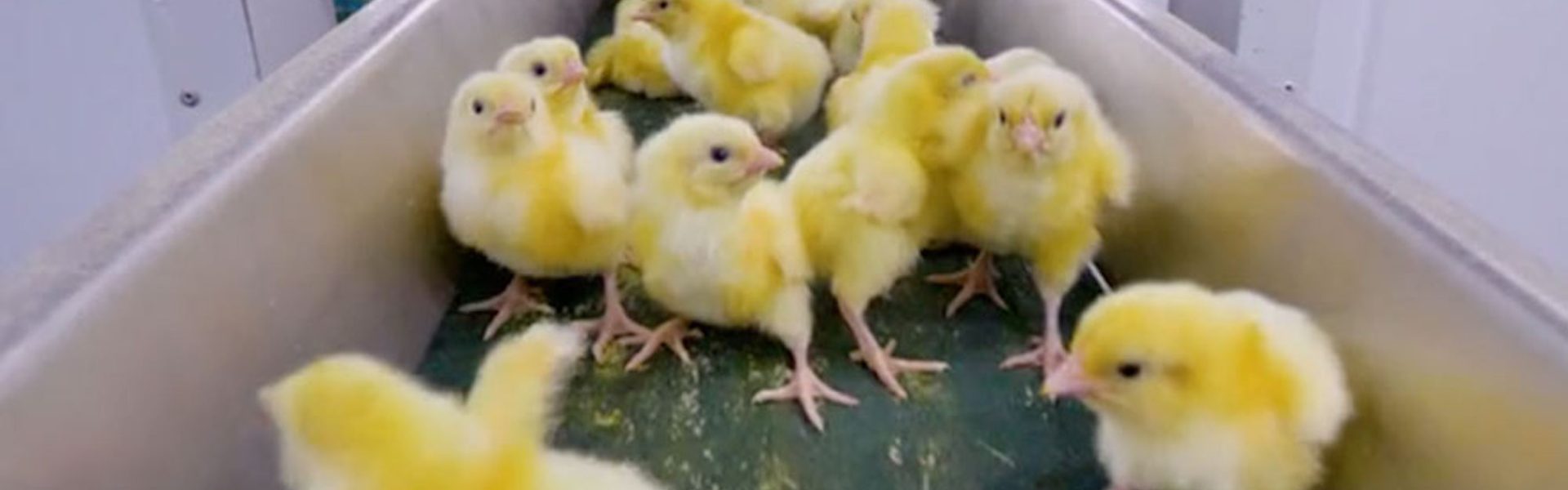
Once chicks hatch, they are placed on a moving conveyor belt, where they are sorted by sex.

If they are considered to be healthy, the female chicks will be transferred to a site where they will be grown to a specific size before being moved to an egg-laying facility. This could be cage, barn or free-range. So, even for the female chicks, it’s a game of ‘Russian Roulette’ when it comes to the quality of life they will ultimately be afforded.

Most of them will be killed at just 18 months old when they are considered ‘spent’ (in other words, when their egg production wanes), long before their lifespan would naturally come to an end.

The journey of a male chick on the conveyor belt ends with being dropped into a metal grinding machine, called a ‘macerator’. Or, being shoved into crates and closed into a chamber and gassed to death with CO2.

Male and female chicks born into the chicken meat industry face a similar fate if they aren’t considered to be ‘viable’.

What about in-ovo testing?

In-ovo sexing technology — which determines a chick’s sex inside the egg before they hatch — is being introduced in some countries as an alternative to killing male chicks after hatching. However, this technology is not currently used in Australia and most countries, meaning millions of male chicks in the egg industry are still routinely killed on their first day of life across Australia and the globe.

Even where in-ovo testing is implemented overseas, it addresses only one aspect of the suffering involved in commercial egg production. While it may reduce the number of chicks killed after hatching, it does not change the fundamental reality that hens are bred, confined and ultimately killed based on their productivity.


There’s a kinder choice

Creating machines to kill millions of chicks is the clinical result of the egg industry’s drive for efficiency as it strives to keep up with consumer demand. But consumers were never made aware of the true cost of eggs, which isn’t shown on any carton label.

See how easy (and delicious!) it is to replace eggs in your meals by exploring our handy guide to egg-free living. From sweet to savoury, cakes to quiches, there is an abundance of natural and tasty ingredients that do what eggs do – but kinder.

Take the pledge today to go egg-free for hens and their chicks. Once done, share this page with friends and family so that they too can become informed shoppers and help shape a kinder future for animals.

TAKE THE PLEDGE TODAY
CONTENT WARNING
This page contains graphic content which some may find upsetting.